
Photo: Paul Sorowka / Own / Society / Own Work
The Search for Touchadam Castle, Part 2: 2019, A Cobbled Surprise
·
Paul Sorowka
A second season opened a metre west of the 2018 trench — and turned up something completely unexpected: a cobbled surface, a ring of large stones, and a sudden rush of eighteenth- and nineteenth-century pottery.
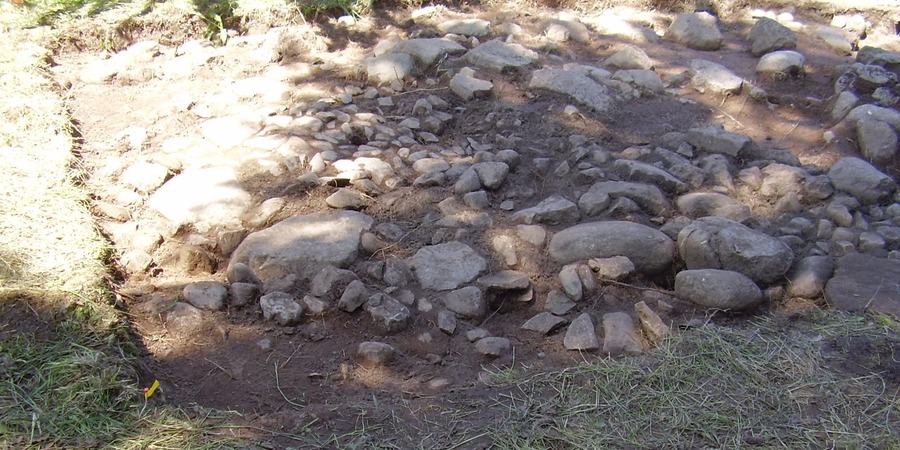
This is part 2 of a four-part series by Paul Sorowka on the Society’s search for the lost castle of Touchadam in Murray’s Wood, Cambusbarron. Part 1 (2018) · Part 2 (2019) · Part 3 (Lockdown research) · Part 4 (Reinterpretation)The second year turned out to be totally different from what we had expected. We set out our trench one metre to the west of where we had dug in 2018 and, just under the turf, found a cobbled area and a number of large stones.
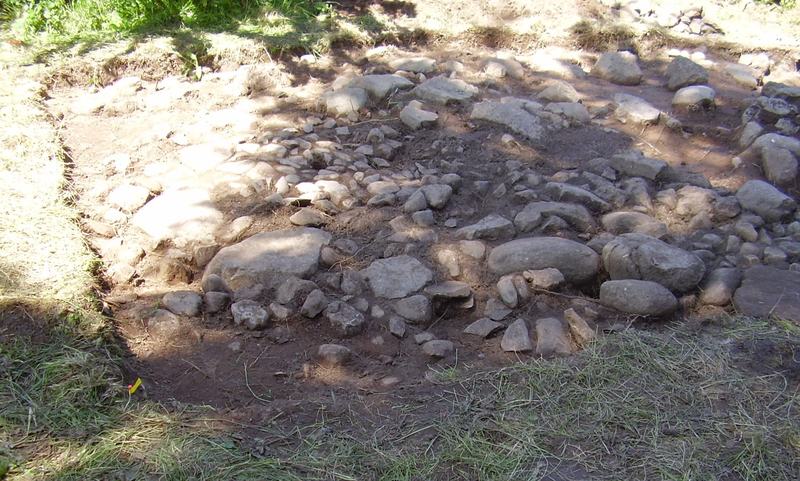
Photo: Paul Sorowka / Own / Society / Own Work
Looking west after the turf had been stripped, showing the cobbled area in the centre.
A Sudden Rush of Pottery
We also began to find quite a lot of pottery — not medieval, but not modern either. The sherds came from only a few different vessels, and once they had been washed, very many of them could be fitted back together. Here are some of the pieces: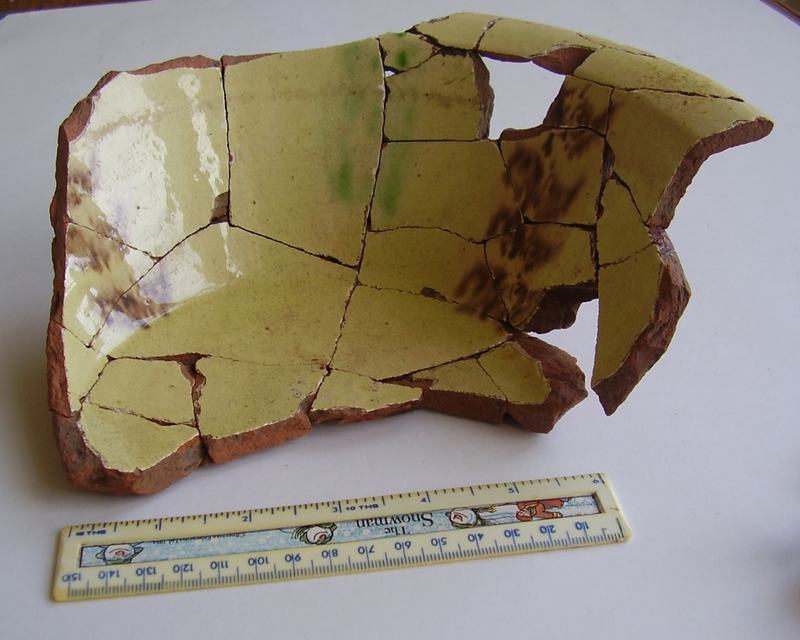
Photo: Paul Sorowka / Own / Society / Own Work
A bowl, probably nineteenth century — perhaps used in a dairy or kitchen.
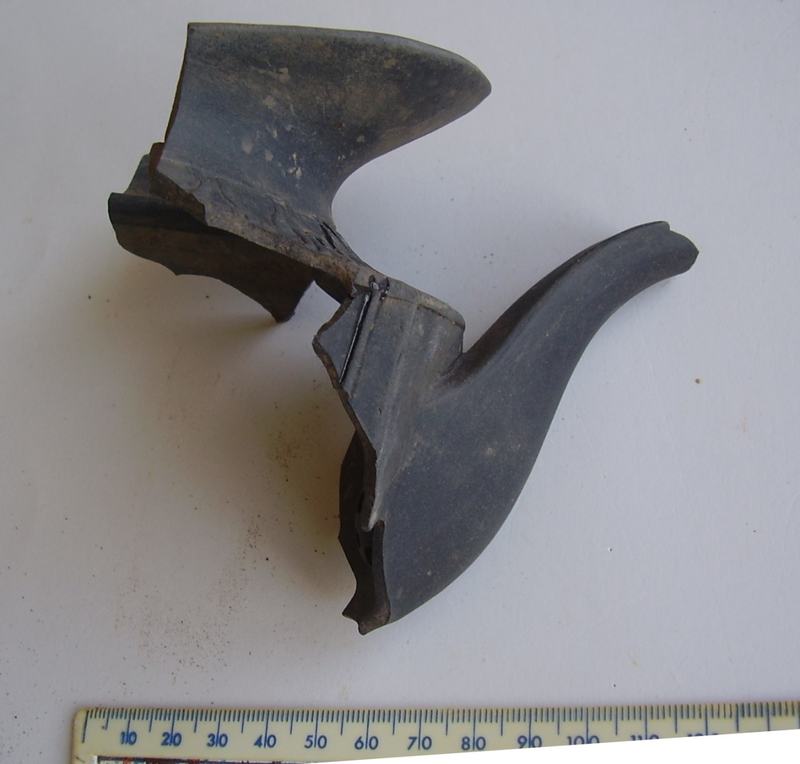
Photo: Paul Sorowka / Own / Society / Own Work
Teapot spout in black basalt ware, popular c.1780–1820. Similar to some made by Wedgwood, but the maker of this one is unknown.
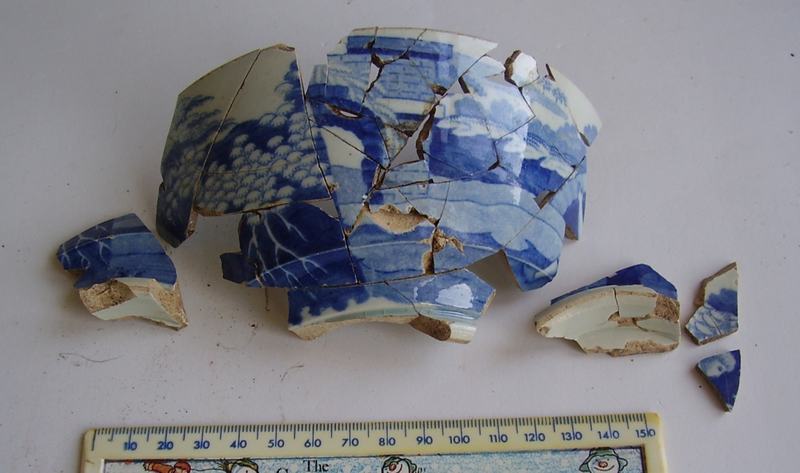
Photo: Paul Sorowka / Own / Society / Own Work
A Chinese-inspired blue-and-white bowl, made in the UK — but by whom?
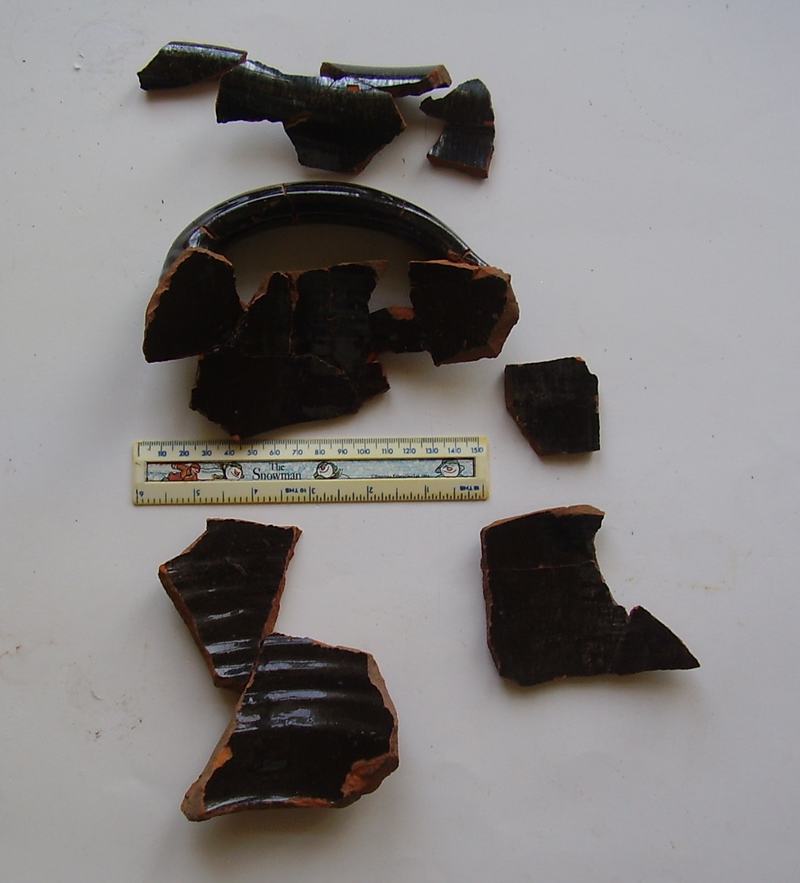
Photo: Paul Sorowka / Own / Society / Own Work
A large treacle-glazed vessel with a handle on either side and a ‘rolled-over’ rim — not quite enough to complete a profile. Date, function and maker all unknown.
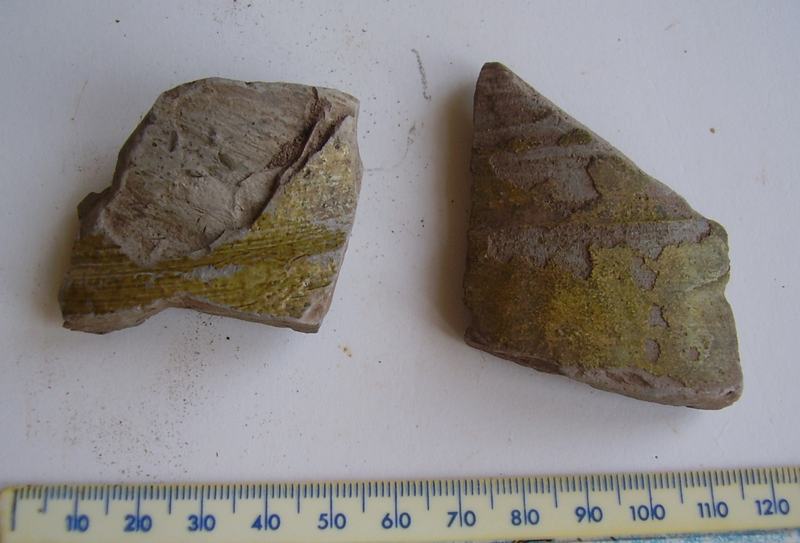
Photo: Paul Sorowka / Own / Society / Own Work
Two sherds of ‘medieval’-type pottery — but more probably seventeenth or eighteenth century.
A Midden? Or Something Else?
Our first thought, prompted by the pottery, was that we had stumbled across a midden belonging to a farm. Roy’s map of c.1750 shows buildings to the south-east of the wood labelled ‘Castle Hill’. Murray’s Wood is enclosed by a stone wall, and although there is a gate in the wall at the corner nearest that farm, it still seemed too far away to be a convenient place to dump the household rubbish.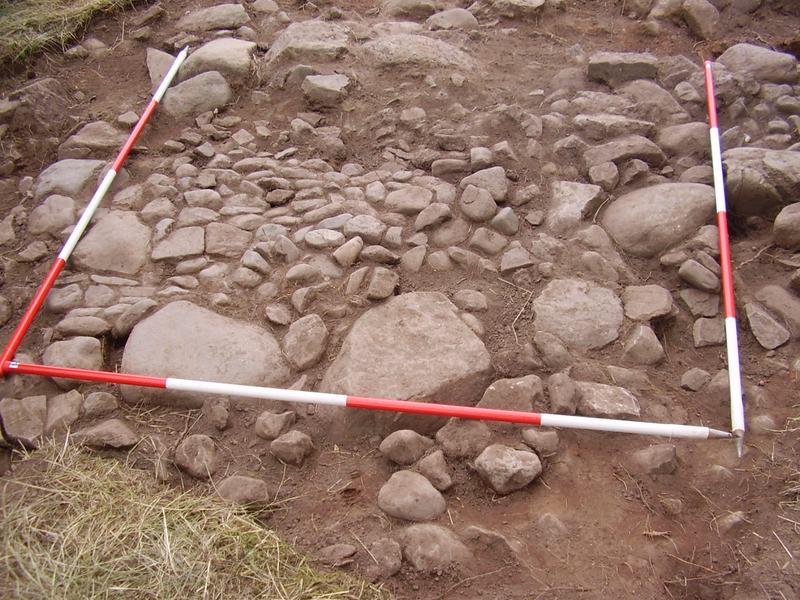
Photo: Paul Sorowka / Own / Society / Own Work
Close-up of the cobbled area, looking north.The cobbles weren’t extensive enough to have been a courtyard, and the absence of recognisable walls also made us doubt that what we’d found had anything to do with the castle we’d been looking for. However, the cobbled area did appear to be enclosed by larger stones. We dug eight test pits (TPs 1–8) before extending the trench to the south-west to take in TP 7a and 7b. That extension revealed more large stones — flat, irregular slabs, not rounded boulders. Pits 1, 4, 5 and 8 also turned up stone, but there wasn’t time to examine them in detail.