Photo: Paul Sorowka / Own / Society / Own Work
The Search for Touchadam Castle, Part 1: 2018, the First Dig
·
Paul Sorowka
In 2017 the Society went looking for a long-lost castle in a Cambusbarron wood. We found rocks, a whetstone and a tanged-iron knife — and a puzzle. Paul Sorowka tells the story of the first season.
This is part 1 of a four-part series by Paul Sorowka on the Society’s search for the lost castle of Touchadam in Murray’s Wood, Cambusbarron. Part 1 (2018) · Part 2 (2019) · Part 3 (Lockdown research) · Part 4 (Reinterpretation)In 2017 the Society’s Committee was looking for somewhere to dig and came across a leaflet published by Cambusbarron Community Council in 2010. It marked the ‘site of Touchadam Castle’ in Murray’s Wood, between Gartur and Murrayshall. None of us had ever heard of the castle, but Touch House (a few miles away) has a sixteenth-century tower incorporated into its later mansion, and we had high hopes of finding the remains of another tower of similar age.
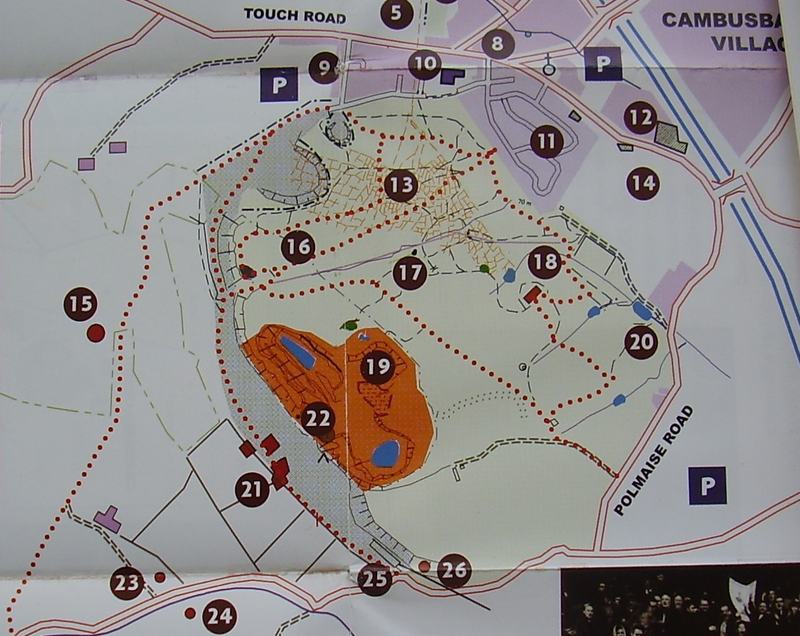
Photo: Paul Sorowka / Own / Society / Own Work
The 2010 Cambusbarron Community Council leaflet that started the search. Point 15 is ‘Touchadam Castle’; Gartur is to the north (un-numbered); 21 is Murray’s Hall.The castle had been mentioned by P.T. Paterson in his book Bygone Days in Cambusbarron (1980):
“All that remains of it are a few very old stones covered in grass and moss, but still decipherable as forming the foundation of walls, in Murray’s Wood between Gartur and Murrayshall.”
A Quiet Visit, A Permission, A Trench
We visited the site on a still summer’s day. It sat at the bottom of a fairly gentle north-facing slope. There were no signs of any walls. Further south we found a short length of what could possibly have been a ditch, and then, some distance from where we’d started, an area scattered with numerous boulders and large stones. That looked more promising. We obtained the landowner’s permission and opened our first trench in 2018.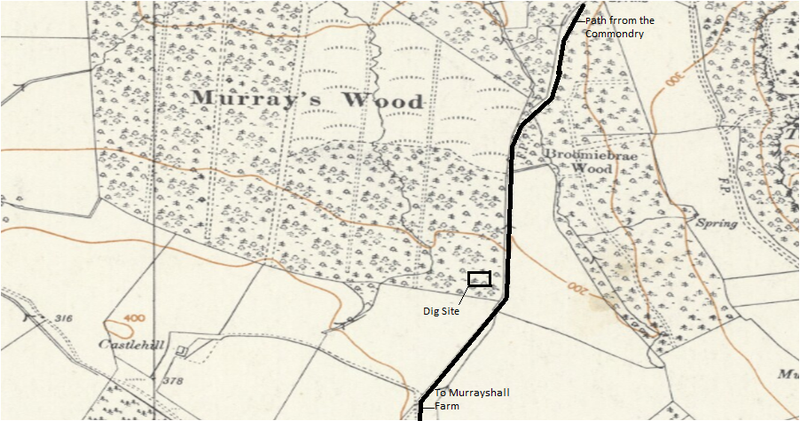
Photo: Reproduced from Ordnance Survey, 1957 / Other / Public Domain
Ordnance Survey, 1957. The 2018 dig site is marked just inside the south-east corner of Murray’s Wood, between Murrayshall Farm and the path from Free Green.
Stones, but no Walls
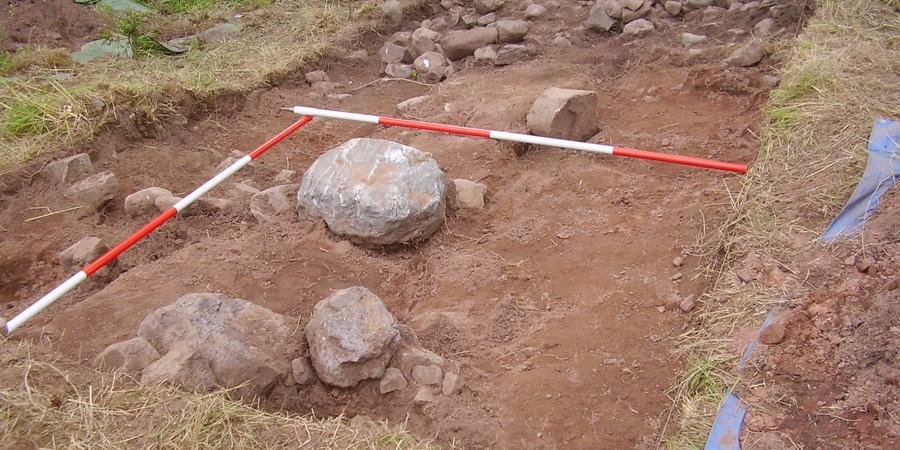
We didn’t find any walls. The boulders and stones were there, at the east end of the trench, but there was no sign of any mortar or coursed foundations — they looked as if they had been scraped together, or spread, from a dump.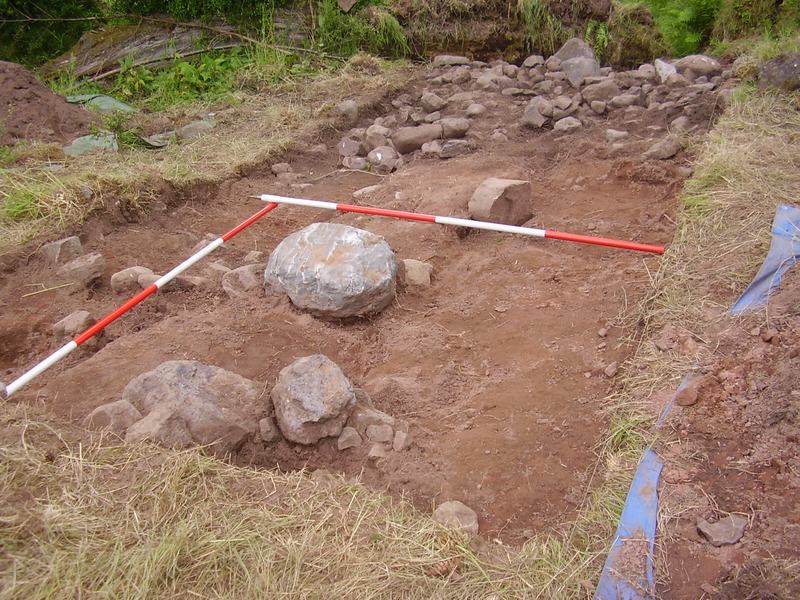
Photo: Paul Sorowka / Own / Society / Own Work
The trench in 2018, looking east after the turf was lifted. The boulders and stones at the far end didn’t look much like the masonry foundations Paterson had described.There were fewer stones at the west end of the trench, and a single large boulder occupied a prominent position on a thick clayey deposit. We dug a narrow slot to follow the clay, but didn’t take a photograph — one of those small regrets that follows you for years.
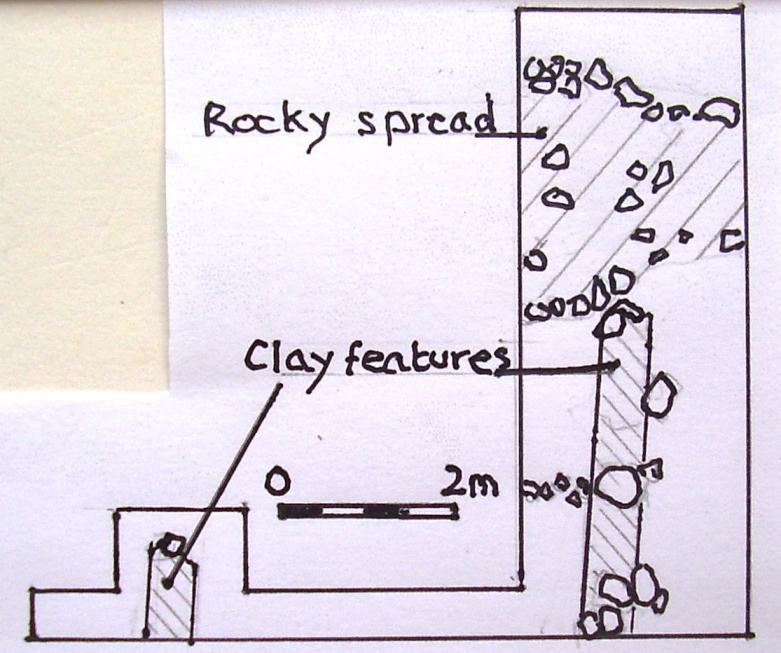
Photo: Paul Sorowka / Own / Society / Own Work
Plan of the 2018 excavated area.
Three Small Finds
What the slot did produce, though, was the only really diagnostic material of the season: a whetstone, part of a tanged iron knife blade with a narrow ‘V’-shaped section, and one piece of medieval pottery.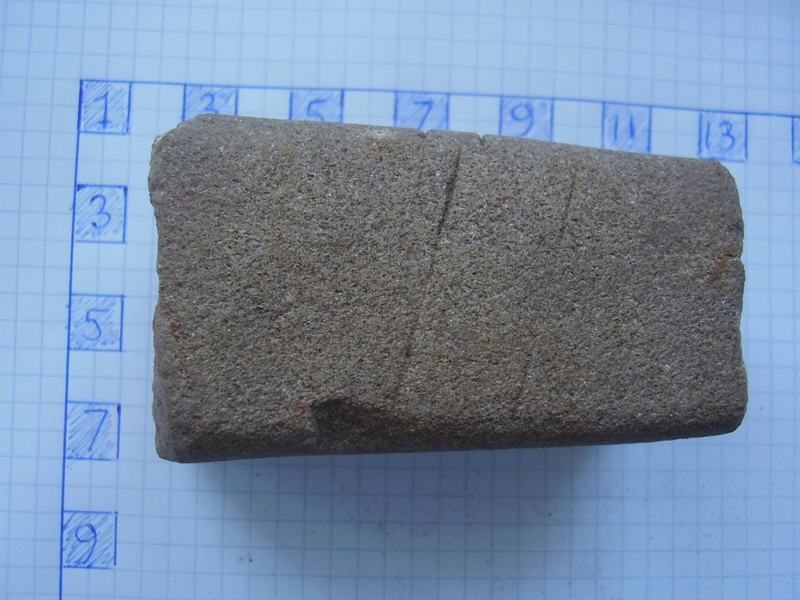
Photo: Paul Sorowka / Own / Society / Own Work
A whetstone recovered from the narrow slot, 2018.
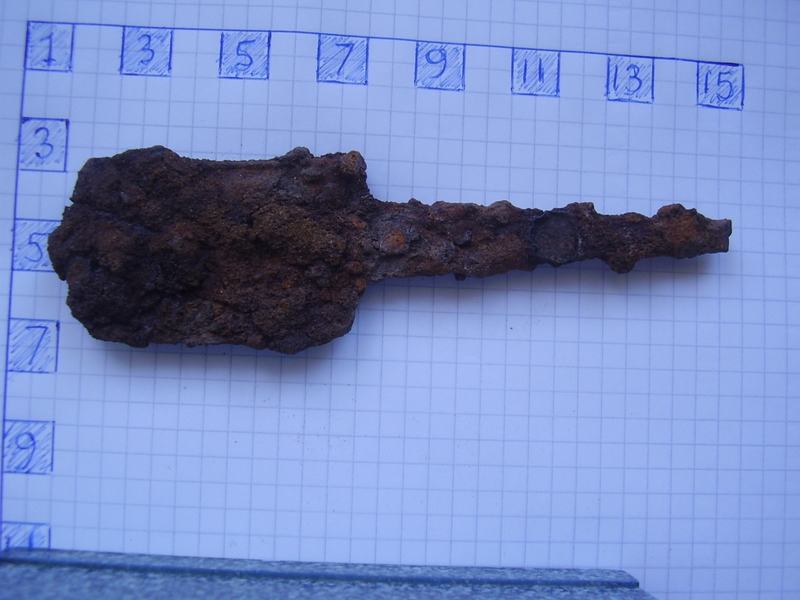
Photo: Paul Sorowka / Own / Society / Own Work
Part of a tanged iron knife blade with a narrow ‘V’-shaped section.
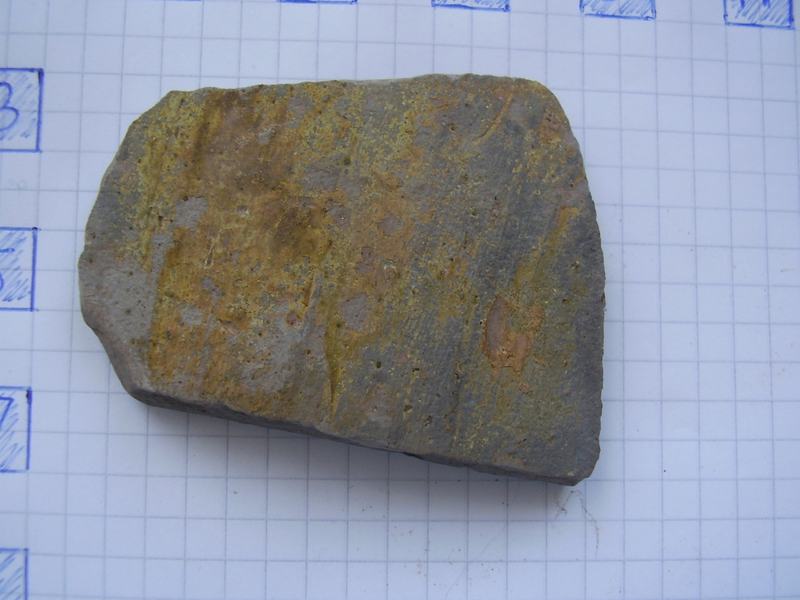
Photo: Paul Sorowka / Own / Society / Own Work
A single sherd of medieval pottery — the only piece recovered in 2018.Not wildly exciting — but enough to bring us back. In 2019 we returned to open an area to the west, hoping that the missing walls might be just a metre or two away. Continued in Part 2: 2019 — A Cobbled Surprise.