From Roosty Tangle to Rock Art: The Story of the Stirling Field and Archaeological Society
As the Society approaches its 150th anniversary in 2028, we trace its remarkable journey from a circular to 'a few gentlemen' in 1878 to the thriving community it is today.
When a small group of Victorian gentlemen gathered in Stirling in the autumn of 1878, they could hardly have imagined that the society they were about to create would still be in existence nearly a century and a half later, now known as The Stirling Field and Archaeological Society – the SFAS.
As the Society approaches its 150th anniversary in 2028, this is the story of how it began, what it achieved, and why it continues to matter.
A Circular to a Few Gentlemen: The Founding of the Stirling Field Club
On 11 November 1878, a circular was issued advising that ‘a private meeting of a few gentlemen interested in the Natural History and Archaeology of the district’ had been held with a view to establishing a society to further the study of the Stirling area. The result was the founding of the Stirling Field Club.
The driving force behind this new venture was Alexander Croall, the first Curator of the Smith Institute. Croall was no ordinary museum keeper. Born in Brechin around 1809, he had trained himself in botany through relentless field trips – reportedly sleeping on the heather and carrying his food in his pocket. Croall’s four-volume work on British seaweeds earned him the affectionate nickname ‘Roosty Tangle’ – Scots for tangled seaweed. Such was his reputation that he was commissioned to prepare a herbarium of the plants of Braemar for Queen Victoria herself.
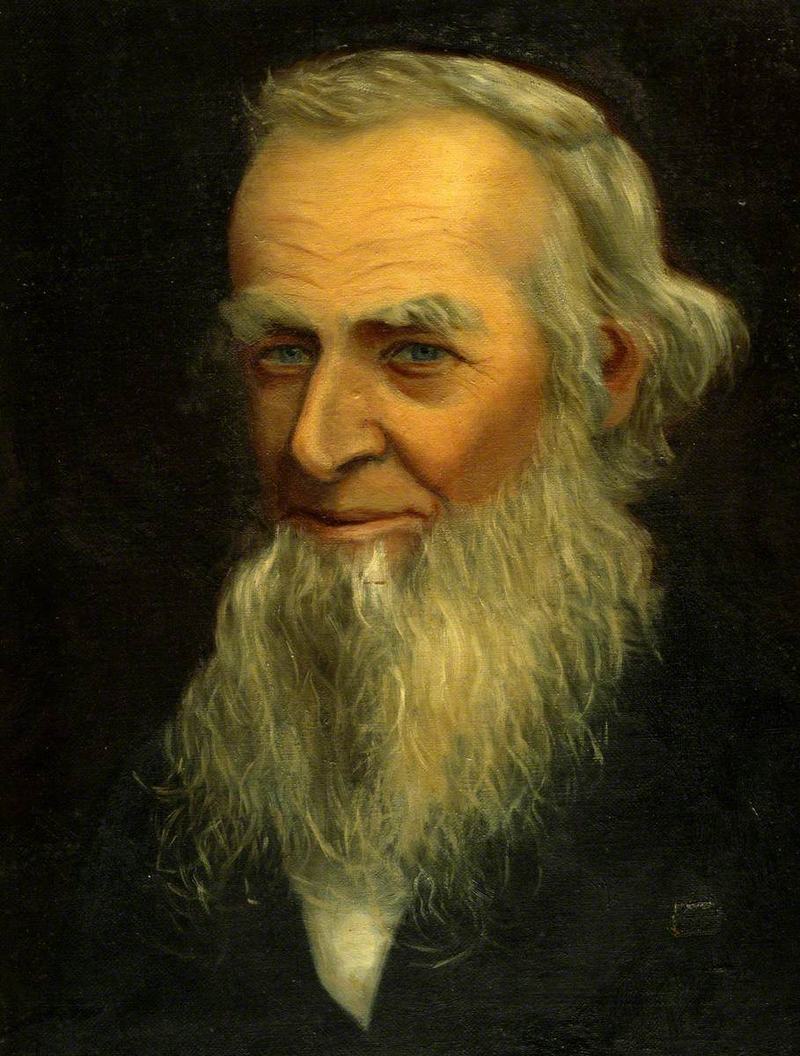
Portrait of Alexander Croall, first Curator of the Smith Institute and founder of the Stirling Field Club. © The Stirling Smith Art Gallery & Museum. Reproduced under CC BY-NC-ND licence via Art UK. Artist unknown.
Croall saw the potential for a society that would channel the enthusiasm of local naturalists, historians, and antiquarians into structured study of the district. His energy was responsible for the founding of the Stirling Field Club.
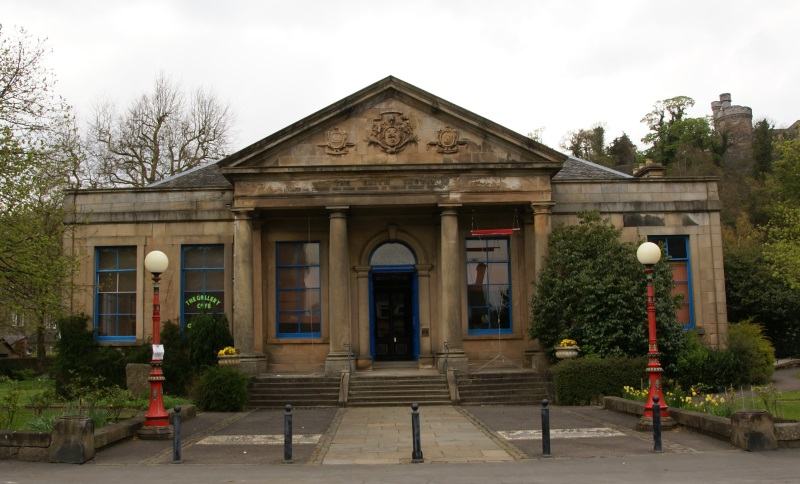
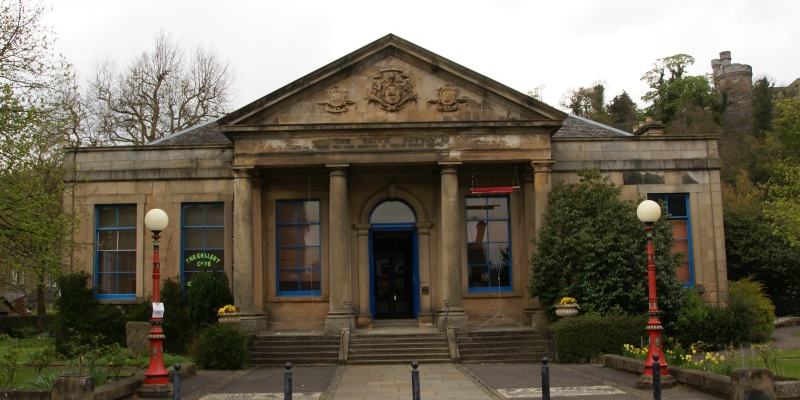
The Smith Institute (now Stirling Smith Art Gallery and Museum), Dumbarton Road, Stirling – the original meeting place of the Stirling Field Club from 1878. Image: Wikimedia Commons, CC BY-SA.
In the early years, the Field Club met in the Smith, and its members helped build up the museum’s collections. The relationship between the two institutions was symbiotic: the Society provided the intellectual framework, and the Smith provided the physical home.
The Transactions: Sixty-One Years of Discovery
The Society’s name changed a few years after its founding to The Stirling Natural History and Archaeological Society. From 1879 until 1939 – with a break during the First World War – the Society met regularly and published its Transactions every year, covering an astonishing range of subjects.
The keyword index of the first volume alone gives a flavour of the scope: Abbey Craig, Celtic cists, the Caledonian Forest, Dumyat, the Roman Antonine Wall, Gaelic place names, fungal species, Stirling Castle, and the wildlife of Stirlingshire. Later volumes added raised beaches of the Forth Valley, rainfall records, conchology, poisonous plants, the King’s Knot, and detailed studies of local parishes, burial grounds, and historic buildings.
The membership was never enormous, but it was distinguished. It reached around 90 gentlemen and up to 20 ‘lady associates’ – who, despite including several regular contributors to the Transactions, could not be elected to the Society’s Council. How times have changed!
The quality of the papers published in the Transactions is striking. These were not amateur scribblings; many represented serious contributions to scientific and historical knowledge. Robert Kidston’s botanical papers were cited internationally. David B. Morris wrote on the raised beaches of the Forth Valley – work that contributed to understanding Scotland’s post-glacial landscape. W.B. Cook produced detailed studies of the King’s Park of Stirling that remain reference works today, and Dr G.T. Galbraith, whose recollections of Society life were later published by the Stirling Local History Society.
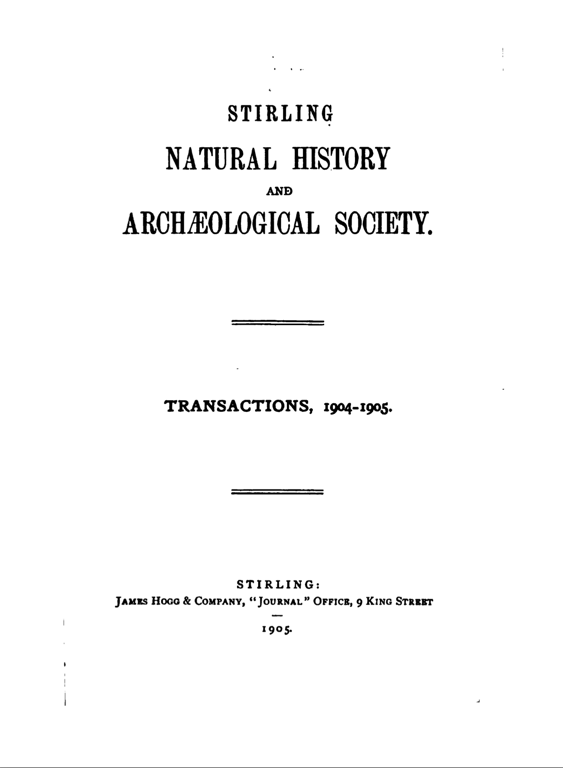
Title page of the Transactions (1904–1905). Public domain. Digitised from Harvard University Library via Internet Archive.
Today, complete runs of the Transactions can be found in Stirling Central Reference Library, Stirling University Library, and the National Library of Scotland. Several volumes have been digitised and are freely available on the Internet Archive and Google Books. John G. Harrison noted in his 2019 academic paper on the Society (published in Forth Naturalist and Historian, Volume 42, pp. 100–117) that the Transactions represent a unique and irreplaceable record of the natural and human history of the Stirling district during a period of extraordinary change – from the late Victorian era through to the eve of the Second World War. A comprehensive index, originally published in 1936, is available on the Forth Naturalist and Historian website.
Silence and Revival: 1939 to the Present Day
The outbreak of the Second World War in 1939 brought the Society’s first incarnation to a close; formal meetings stopped and the Transactions ceased publication.
But the spirit of the Society proved resilient. In the post-war decades, the tradition was revived, and the Stirling Field and Archaeological Society was reconstituted – carrying forward the heritage of its Victorian predecessor under a name that reflected its evolving focus. Whilst employed at the Smith Museum in the 1960s, the Egyptologist James K. Thomson was our Chairman and led excavations of local sites, inspiring many to join the Society. The Society was formally registered as a Scottish charity (SC026822) on 11 March 1997, its constitution declaring that its continuing purpose was to inform the public ‘about archaeology, natural history, local history and environmental subjects, with particular reference to the Stirling area’.
The Society began to publish a Newsletter in 1972, but the intellectual succession was better maintained through the Forth Naturalist and Historian journal, established in 1975 by University of Stirling and Central Regional Council staff. The FNH journal explicitly describes itself as a successor to the SFAS Transactions, creating an unbroken lineage of local scholarly publication from 1878 to the present day.
Forth Naturalist & Historian website: fnh.stir.ac.uk
The Modern Society: Lectures, Outings, and Excavations
Today, SFAS continues to operate much as its founders intended: offering a programme of winter lectures and summer outings, open to all, which reflects the members’ interests and endeavours to encourage the wider public to explore the natural history, local history, and archaeology of the Stirling area. The Committee is always glad to receive suggestions for summer outings and for topics to be covered at our winter meetings.
For the last fifteen years the Society has also carried out its own fieldwork to provide hands-on experience of archaeological exploration for those who seek it. Some of these, most notably our work for the Bannockburn House Trust, have been reported in Discovery and Excavation since 2022, but all will be reprised in updates to this website. One of particular interest, an excavation in 2014 at the site of Craigend Distillery (c.1780–1812), revealed very little in the ground but a huge amount of information was discovered in various archives.
An Archive for the Ages
The Society’s historical legacy is preserved across multiple institutions. The records of the predecessor Stirling Natural History and Archaeological Society are held by the Stirling Council Archive Service, as catalogued by The National Archives at Kew. Physical copies of the Transactions survive in Stirling Central Reference Library (which holds a full run), Stirling University Library, and the National Library of Scotland. The Society also has copies of a number of volumes.
In the digital age, the Transactions have found new audiences. Volume 1 (1898) is freely available on the Internet Archive, scanned from Harvard University Library. Additional volumes are accessible through Google Books with searchable text. The Open Library holds catalogue records, and a Classic Reprint edition of the 1892–93 volume is available for purchase. The availability of the original 1936 Index and volume contents on the FNH website has made it significantly easier to locate material across the 61 volumes. For anyone researching the history, wildlife, or landscape of the Stirling district, these Transactions remain an indispensable resource.
Approaching 150: Looking Forward
In 2028, the Stirling Field and Archaeological Society will mark 150 years since that circular was issued to ‘a few gentlemen’ in November 1878. It is a remarkable milestone – one that connects a twenty-first century volunteer society with the enquiring minds of the past when they, too, embarked on a quest to record and understand the local environment – and to make new discoveries along the way.
If you would like to join us on our adventure you are warmly welcome. The Society meets throughout the year and is always open to new members and visitors. There is no charge to attend, and no expertise is required – just an interest in the natural and human heritage of this extraordinary part of Scotland.
Sources and Further Reading
This article draws on the following sources, all of which are publicly accessible:
- Harrison, J.G. (2019) ‘The Stirling Natural History and Archaeological Society’, Forth Naturalist and Historian, Vol 42, pp. 100–117: fnh.stir.ac.uk
- Stirling Local History Society – ‘11th November 1878’
- Stirling LHS – Transactions of the SNHAS
- Wikipedia – Stirling Smith Art Gallery and Museum
- Old Town Cemetery Stirling – Alexander and Annie Croall
- Montrose Natural History and Antiquarian Society – Alexander Croall
- Art UK – Portrait of Alexander Croall
- OSCR – Charity Details SC026822
- Forth Naturalist & Historian: fnh.stir.ac.uk
- The National Archives – SNHAS Creator Record
- The National Archives – Stirling Council Archive Service
- Internet Archive – Transactions Vol 1 (1898)
- Stirling Archaeology Substack (Dr Murray Cook): stirlingarchaeology.substack.com
- Current Archaeology – SFAS Local Societies Listing
- Stirling Smith Art Gallery & Museum: smithartgalleryandmuseum.co.uk
Note on images: This article references publicly available images and provides links to their sources. The portrait of Alexander Croall held by the Stirling Smith Art Gallery & Museum is available under a Creative Commons Attribution-NonCommercial-NoDerivatives licence via Art UK.