Photo: Anne Burgess / Wikimedia Commons / CC BY-SA 2.0 — Source
Decoding Scotland's Ancient Rock Art: Dr Tertia Barnett Reveals Prehistoric Mysteries
Dr Tertia Barnett's captivating lecture on Scottish rock art unveiled the secrets of Scotland's oldest artistic tradition, engaging Society members with tales of Neolithic creativity.
Ancient Artistry Revealed
On Tuesday 10th March, Dr Tertia Barnett delivered a fascinating lecture to Society members and guests on the enigmatic world of Scottish rock art. The evening proved to be one of our most engaging sessions of the year, with the audience captivated by Dr Barnett's expertise in this lesser-known aspect of Scotland's prehistoric heritage. Her presentation illuminated the remarkable artistic tradition that flourished across Scotland thousands of years ago, leaving behind mysterious symbols carved into living rock that continue to puzzle and inspire researchers today.
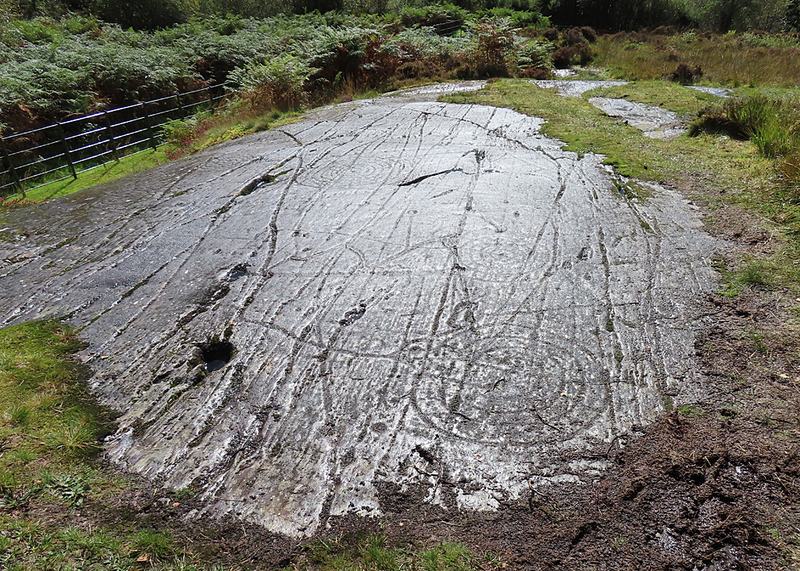
Photo: Anne Burgess / Wikimedia Commons / CC BY-SA 2.0 — Source
A Nationwide Prehistoric Canvas
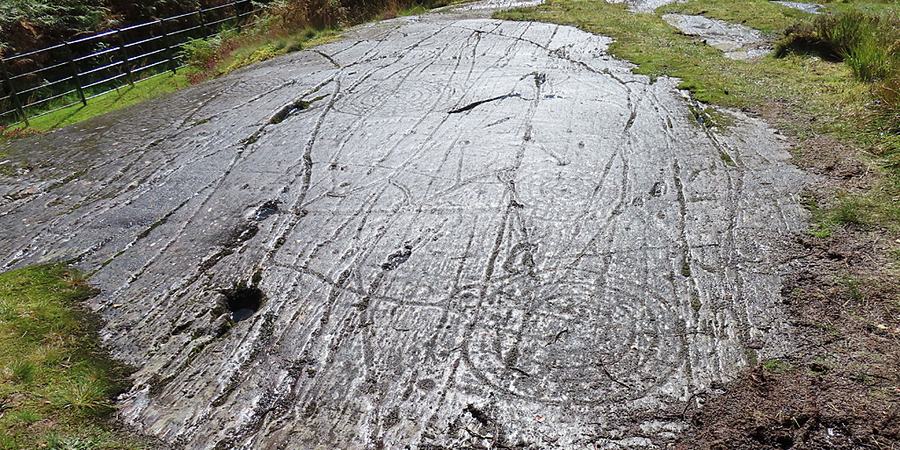
Dr Barnett revealed the astonishing scope of Scotland's rock art heritage, with over 5,000 recorded panels scattered across the landscape from the Borders to the Highlands. These ancient artworks, predominantly dating to the Neolithic and Bronze Age periods (approximately 5,000 to 2,500 years ago), represent Scotland's oldest surviving artistic tradition. The cup and ring marks, spirals, and other geometric designs were pecked into natural rock surfaces using stone tools, creating enduring monuments to prehistoric creativity. Many of these sites remain hidden in plain sight, weathered by millennia but still visible to those who know where to look.
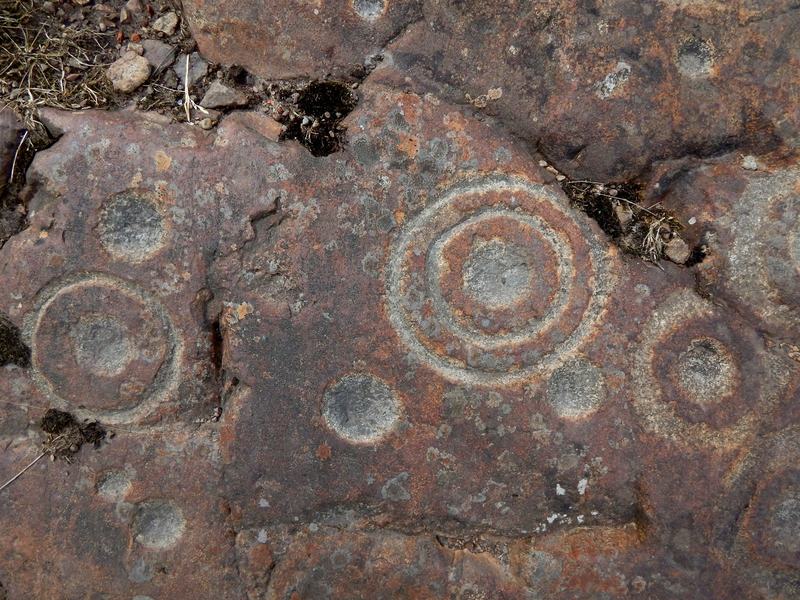
Photo: Lairich Rig / Wikimedia Commons / CC BY-SA 2.0 — Source
These mysterious symbols represent our ancestors' earliest attempts to mark their presence on the landscape, creating a dialogue between past and present that speaks across five millennia.
Techniques and Symbolism
The lecture explored the sophisticated techniques employed by prehistoric artists, who used pointed stone tools to create intricate patterns through patient pecking and grinding. Dr Barnett demonstrated how the characteristic cup marks—small circular depressions—were often surrounded by concentric rings, creating complex compositions that may have held deep spiritual or territorial significance. The positioning of these artworks on prominent outcrops and natural viewing platforms suggests they served as waymarkers or sacred sites, possibly related to astronomical observations, territorial boundaries, or ritual practices that remain lost to us.
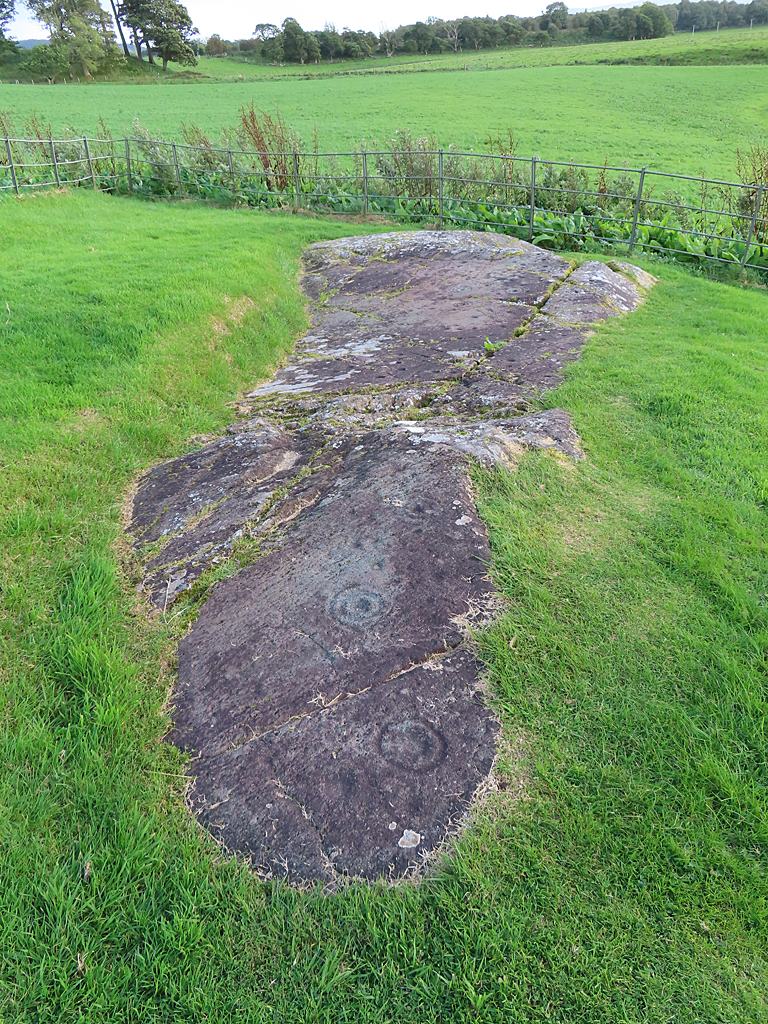
Photo: Anne Burgess / Wikimedia Commons / CC BY-SA 2.0 — Source
Local Connections and Recent Discoveries
Particularly relevant to our Stirling audience, Dr Barnett highlighted significant rock art sites within the Forth Valley region, including examples on the Campsie Fells and near Kilsyth. She discussed the ongoing Scotland's Rock Art Project, which has revolutionised our understanding of these ancient symbols through systematic recording and digital documentation. Recent discoveries continue to add to the corpus, with new sites identified through community involvement and archaeological survey. The project's collaborative approach, involving local communities, archaeologists, and heritage enthusiasts, exemplifies the kind of citizen science that SFAS has long championed in our own research endeavours.
Conservation Challenges and Future Research
The evening concluded with discussion of the urgent conservation challenges facing Scotland's rock art heritage. Dr Barnett outlined how erosion, vegetation growth, and human activity threaten these irreplaceable archaeological resources. Climate change presents additional risks, with increased rainfall and temperature fluctuations accelerating natural weathering processes. However, innovative recording techniques, including 3D scanning and photogrammetry, are creating permanent digital archives of these fragile monuments. The enthusiastic questions from our audience reflected the evening's success in raising awareness of this remarkable but vulnerable aspect of Scotland's prehistoric past, reinforcing the importance of continued research and protection efforts for future generations.
Click here for more details on the Rock Art Project.